Upgrade from Maximo to MAS

Prepare for the future of asset management with Maximo Application Suite (MAS)

Upgrade to MAS with confidence

Overcome MAS upgrade challenges 

MAS isn’t just a technical upgrade, it’s also a high-stakes business transformation

Without a structured approach and experienced team, MAS upgrades take longer and don’t deliver expected outcomes. 

Upgrades commonly stall or fail due to:

  • Unclear ROI
  • Confusion around AppPoints licensing
  • Misaligned business and IT timelines
  • Risk of downtime and disruption
  • Complex integrations with legacy systems and ERPs
  • Fear of breaking critical or custom workflows
  • Low user adoption after go-live

Cohesive’s expertise and process ensure your MAS upgrade is smooth, secure, and built for long-term success

Align multiple stakeholders and technologies

Ensure data integrity across systems

Design a resilient and secure architecture

Increase cost efficiency with AppPoints

Customer Success Stories

Case studies on successful metro and rail asset management implementation

Case Study

Implementing Maximo across remote sites with data replication enabled continuous operations, centralized reporting, and efficient asset management.

Case Study

A strategic partnership to drive clean energy optimizes future operational efficiencies in the New Nuclear design phase.

Case Study

DP World Southampton cut breakdowns by 10% by shifting from reactive, break-fix maintenance to a preventive, insight-driven approach.

Guide

Deploy MAS with Confidence

Make the right MAS deployment decisions for performance, scalability, and ROI from day one 

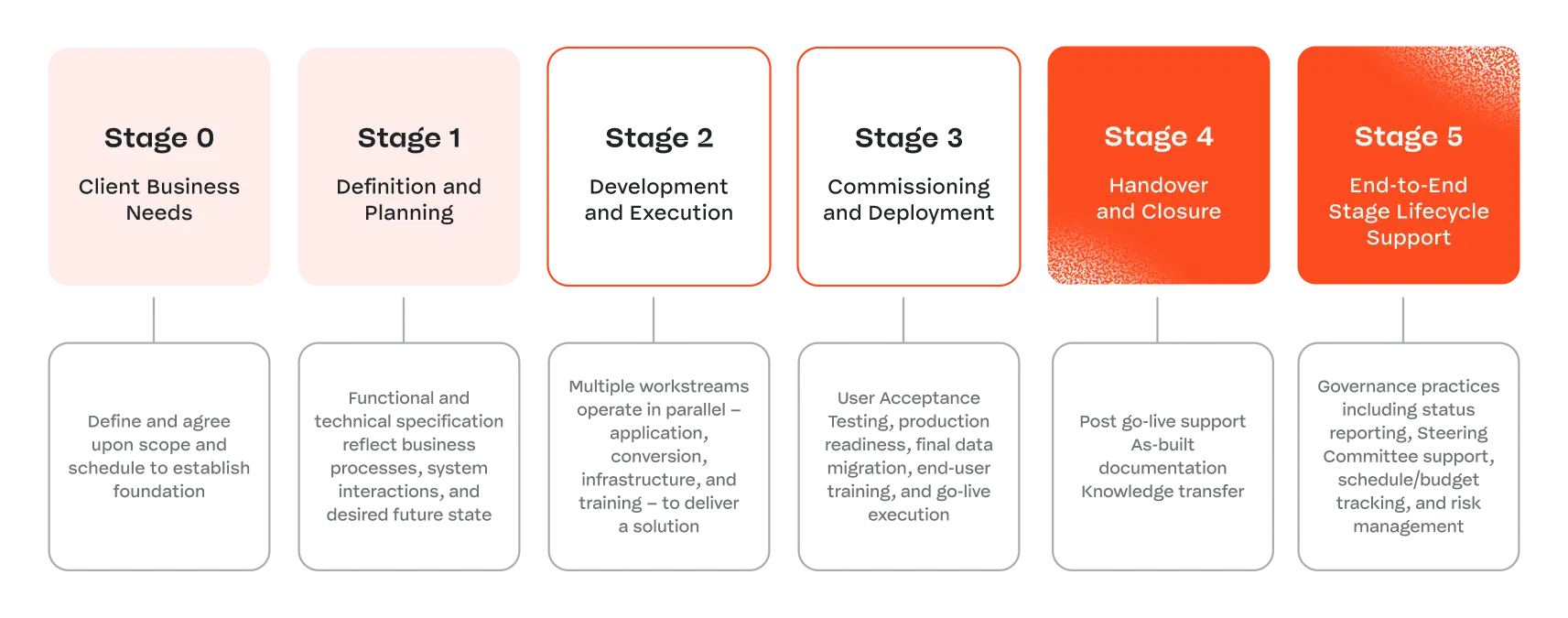
The Cohesive Project Framework

Our MAS upgrade delivery model is built on best practices for consistent, high-quality project execution

We work together with your team, so MAS upgrade projects stay on schedule and deliver successful outcomes.

Cohesive Data Utility

Migrate data seamlessly and slash downtime with Cohesive Data Utility 

Cohesive’s unique, IBM-approved solution, reduces risk and downtime during your MAS upgrade. Automated synchronization ensures data integrity. Your users can continue working in the system until the cutover to MAS. 

Cohesive Solutions for MAS

Realize the value of your Maximo investment with Cohesive as your partner

Because we’re responsible for supporting MAS, we implement solutions that are built for the long term.

Still learning about MAS?

Understand where MAS delivers value across your assets, operations, and data.

Are you ready for the upgrade?

Assess your MAS upgrade readiness to make sure your team and environment are prepared. 

Want to reduce your IT burden?

Simplify operations with managed environments designed for performance, scalability, and security on OpenShift.

Reliable support at every stage

Expert support across current and legacy Maximo, keeping operations stable while you upgrade.

MAS Upgrade Resources

IBM Maximo Application Suite (MAS) allows you to attain operational predictability, reliability, and efficiency.
Transitioning to IBM Maximo Application Suite (MAS) involves deciding how will you deploy and maintain MAS
CDU synchronizes data across environments, enabling seamless transitions without disrupting operations.
Learn how to rightsize your AppPoints so you aren’t paying more than you need

Frequently Asked Questions

As of September 30, 2025, IBM no longer provides updates, patches, security fixes, or technical support for Maximo 7.6.1.x or earlier versions. Users of legacy Maximo are vulnerable to potential security issues and may be unable to access critical updates.

The latest version of MAS supports compliance with ISO 55000, health, safety, and environmental (HSE) requirements, cybersecurity frameworks, and industry standards. If you choose to remain on Maximo 7.6 or prior, you won’t be in compliance with regulatory or cybersecurity standards. This version won’t be updated with security patches. If a vulnerability exposes you to a cyberattack, IBM will not be providing a fix.
Depending on your licensing and hosting requirements, your initial investment in MAS is not necessarily more than what you’ve been paying for Maximo, but with much higher value. You can get feature parity between the previous version of Maximo and the Manage module of MAS. Plus, you will have access to additional modules, which will allow you to expand your maintenance and operations to become a mature Enterprise Asset Management program. 

With MAS, IBM has shifted to a licensing system where users are assigned a certain number of AppPoints based on their access level and the features they use. Users consume AppPoints when they log in and access different MAS applications, with the points being deducted from a shared pool.   

MAS is designed to meet your specific needs and workflows. APIs support integrations with other systems, such as third-party ERPs, reliability solutions, and mobile applications. You’ll want to be sure that any integrations you have are fully supported as IBM as well as other vendors continue to update their solutions. The MAS upgrade is an opportunity to reduce the number of brittle and risky configurations you have and ensure they are built to last.
If your team is used to Maximo, they will feel comfortable with the core module of MAS, MAS Manage. That said, there are improvements in the new MAS that streamline the user experience and there are new modules for your team to learn. Cohesive can help with change management to ensure smooth adoption across the organization, such as videos and user training.

MAS can be deployed on-premise or in private or public cloud environments. If you go the cloud route, you may prefer a self-hosted solution, which gives you the option to rely on your IT team or to partner with a third party. You can also choose to partner with a third party for managed hosting, which includes both hosting and ongoing maintenance and support services.


Learn more about MAS hosting

The way that MAS is built represents a significant departure from the previous Maximo Asset Management architecture, which used a traditional client/server topology. Instead, MAS has a container-based microservices architecture running on IBM Red Hat OpenShift.


The change improves the platform’s core capabilities, security, and supportability. However, it also requires different IT resources and support models than previous versions. Let’s say you had one Windows production server for Maximo 7.6 for 100 concurrent users. Now, expect that you’ll need to procure and provision five Linux production servers at a minimum, ideally six. Plus, an equal number of non-production servers.


Learn more about MAS hosting
Talk to a MAS Expert

Whatever the challenge. Wherever it takes you. We’re right there with you, from the very start.

Partner with the market-leading IBM Maximo® service provider and systems integrator.